
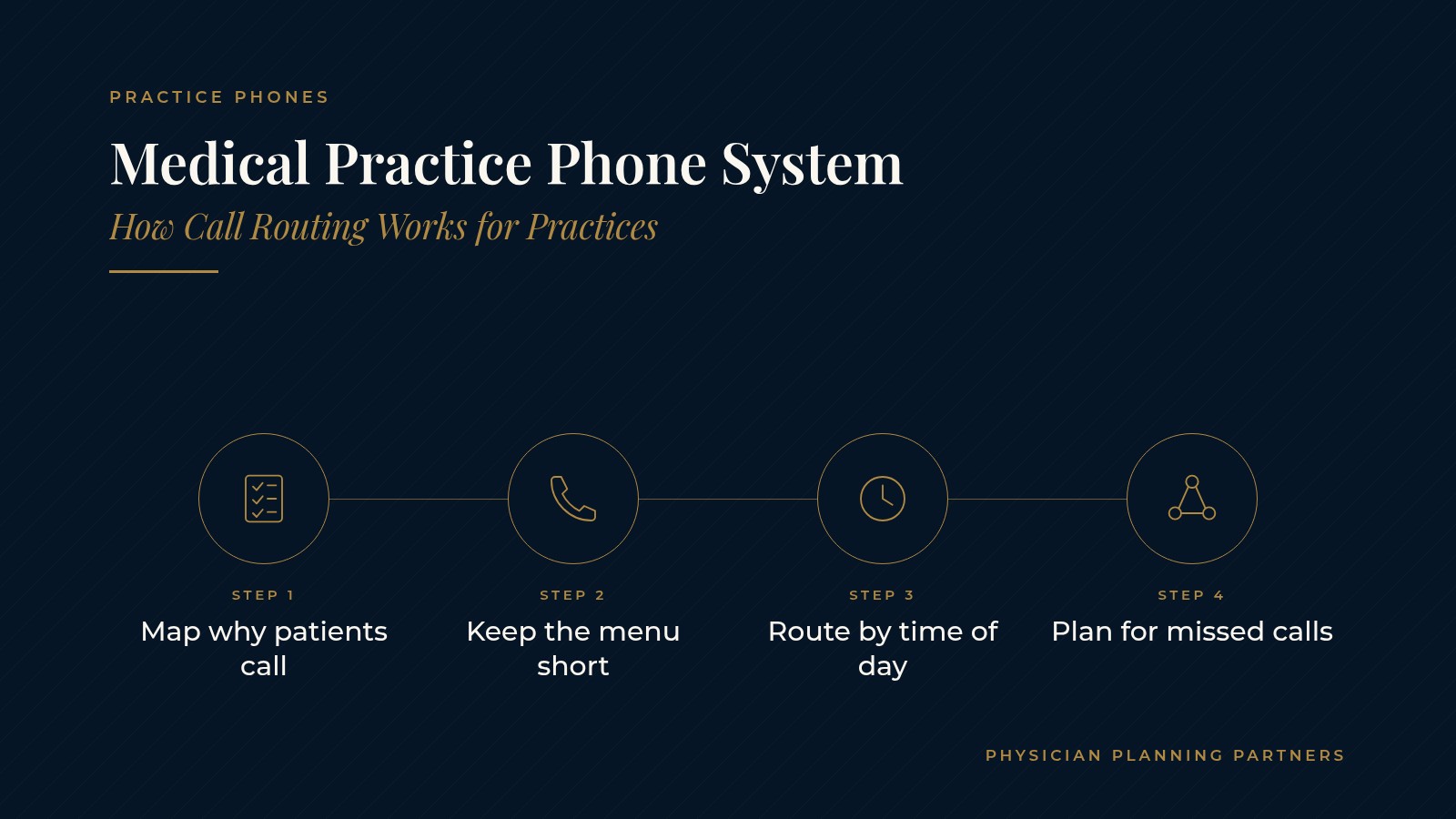
Medical Practice Phone System | How Call Routing Works for Practices
A medical practice phone system is the set of lines, numbers, menus and devices that carries every call between patients and the office. For many practices the phone is still the most common way patients schedule, ask questions and reach staff, so the way calls are answered and routed shapes the first impression of the office. This resource center guide explains how a medical practice phone system is usually organized, how call routing and a phone tree work, how practices think about missed calls and where owners can find an outside perspective.
The short answer: a medical practice phone system receives incoming calls and sends each one to the right person, group or message based on rules the practice sets. Call routing decides where calls go by time of day, caller choice and staff availability, and a short, clear phone tree helps patients reach the right desk with fewer steps.
Key takeaways
- Map every reason patients call.
- Keep the phone tree short.
- Route calls by time of day.
- Plan for overflow and missed calls.
- Review call reports on a routine.
How a medical practice phone system is organized
Lines, numbers and extensions
Most practices have one main number that patients know, plus extensions or direct lines for departments such as scheduling, billing questions, referrals and clinical staff. Some offices also keep separate numbers for each location or for other medical offices that call in. Writing down every number and where it rings is a common first step before any change.
Desk phones, softphones and mobile apps
Calls can ring on desk phones, on computer softphones or on mobile apps, depending on the system. Cloud phone systems often let the same extension ring in several places at once. The guide to medical practice VoIP explains how cloud phone systems work for practices.
Who manages the settings
Someone needs to own the phone settings, whether that is the office manager, an internal IT contact or an outside phone vendor. A clearly named person makes it easier to update greetings, holiday hours and staff changes without delays.
Call routing basics for medical offices
Routing by time of day
Call routing rules usually follow the office schedule. During open hours, calls ring the front desk or a call group. During lunch, holidays and evenings, calls move to a different greeting, a message line or an answering service the practice has chosen.
Ring groups and call queues
A ring group sends a call to several phones at once, while a call queue holds callers in line until the next person is available. Many practices use a queue for scheduling calls so that callers hear a short message and wait in order instead of hearing a busy signal.
Routing by location or department
Multi-location practices often route calls to the office the patient chose, or to a central scheduling team that handles every site. Departments such as referrals or medical records may have their own routing so those calls do not compete with appointment calls.
Physician Planning Partners can introduce you to independent professionals who work with medical and healthcare practices on phone systems, call routing and office communications. If an outside view of how calls move through your office would be useful, request an introduction.
Designing a phone tree patients can follow
Start with the reasons patients call
A practical phone tree starts with a list of the most common reasons patients call, such as scheduling, questions for clinical staff, billing questions and directions. Placing the most common reason first shortens the path for most callers.
Keep menus short
Many practices keep the main menu to a handful of choices and avoid layers of submenus. Each option is worded in plain language, and the option to reach a person is easy to find.
Greetings and recorded messages
The main greeting usually names the practice, shares the office hours and points callers with an emergency to the right place before the menu begins. The page on medical office call routing and IVR gives a broader look at how menus and greetings are planned.
Testing the experience
Calling the main number from an outside phone, at different times of day, shows what patients actually hear. Many practices repeat this test after any change to hours, staff or menu options.
Planning for missed calls and busy periods
Why missed calls happen
Missed calls tend to cluster at opening time, after lunch and on Mondays, when many patients call at once. Short staffing, long hold times and menus that loop back to the start can also lead callers to hang up.
Overflow options
Practices often plan an overflow path for busy periods. That can mean a second call group that picks up when the first is busy, a callback option that saves the caller's place, or a message line that staff check on a set schedule.
Callbacks and voicemail routines
A voicemail box only works when someone checks it. Naming who listens to messages, how often and how quickly calls are returned keeps messages from waiting too long. The guide to medical front desk training covers phone skills and routines for front office staff.
Reviewing how the medical practice phone system is working
Call reports
Many phone systems include reports showing call volume by hour, average wait time, abandoned calls and missed calls. Reviewing these reports with the office manager on a regular schedule helps the practice adjust staffing and routing rules.
Matching calls to marketing
Some practices use tracking numbers to see which listings, ads or pages lead to phone calls. The guide to medical practice call tracking explains how call tracking fits with the rest of a practice phone setup.
Keeping the setup documented
A short written record of numbers, menus, greetings, ring groups and after-hours rules makes it easier to train new staff, switch vendors or add a location later. Many practices keep this record with the rest of the office procedures.
Frequently asked questions
What is a medical practice phone system?
A medical practice phone system is the set of lines, numbers, menus and devices that carries calls between patients and the office and sends each call to the right person or message.
How does call routing work in a medical office?
Call routing follows rules the practice sets, sending calls to the front desk, a call group, a queue or a message line based on time of day, caller choice and staff availability.
How many options should a phone tree have?
Many practices keep the main phone tree to a handful of plain-language choices, place the most common reason first and make the option to reach a person easy to find.
Why do medical offices have missed calls?
Missed calls often cluster at opening time, after lunch and on busy days, and can also come from short staffing, long hold times or menus that loop back to the start.
Who can help review a practice phone system?
Independent phone system and communications professionals can review the current setup, menus and call reports, while the owners decide which options fit the practice.
Request an introduction to an independent professional
Physician Planning Partners can introduce you to independent professionals who work with medical and healthcare practices on phone systems, call routing and patient communications. Want a clearer picture of how a medical practice phone system fits your office? Take the 2-minute Practice Check and request an introduction. You can also call or text (972) 616-4581, or contact us.


