
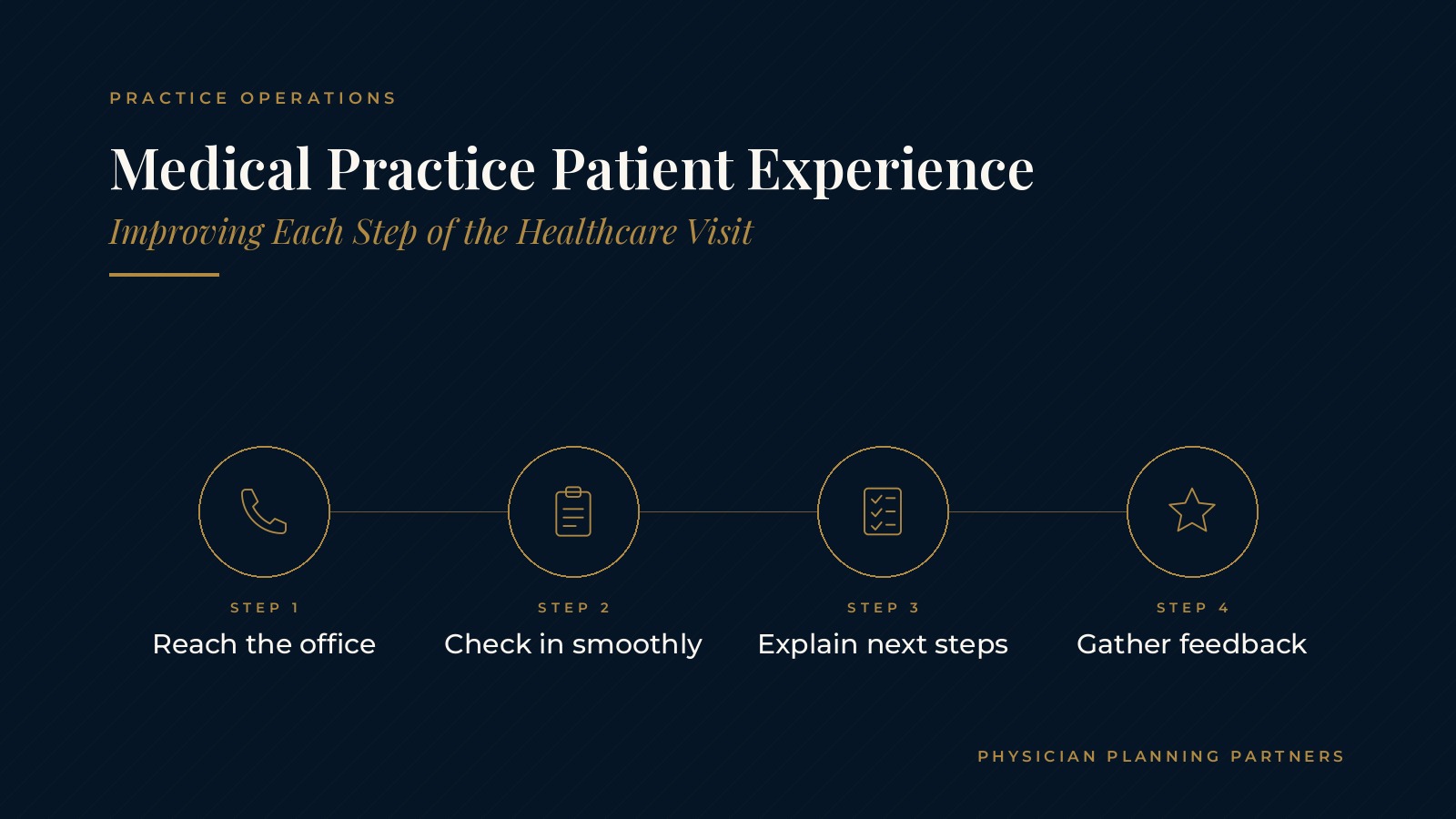
Medical Practice Patient Experience | Improving Each Step of the Healthcare Visit
Medical practice patient experience is the sum of every interaction a patient has with an office, from the first phone call or online search to the follow-up after a visit. For medical and healthcare practices, it covers how easy the office is to reach, how smoothly check-in runs, how clearly staff communicate and how well next steps are explained. This resource center guide walks through the main stages of the medical office visit, the operational habits practices commonly review and simple ways owners keep patient experience in view.
The short answer: medical practice patient experience describes how patients feel about each step of working with an office, not only the time spent with a physician. Practices usually look at it stage by stage, from scheduling to follow-up, and use short feedback routines to spot the steps that need attention.
Key takeaways
- View the visit as connected stages.
- Make the office easy to reach.
- Keep check-in calm and predictable.
- Explain next steps clearly.
- Gather feedback on a steady rhythm.
What medical practice patient experience means
More than the exam room
Patient experience in healthcare includes the moments before and after the appointment as much as the appointment itself. A patient forms impressions while searching for the office, calling to schedule, finding parking, waiting in the lobby and receiving instructions afterward. Each of these steps is shaped by the way the office runs day to day.
Patient experience versus patient satisfaction
The two terms are related but not identical. Patient experience describes what happened during each interaction, such as whether a call was answered or a form was easy to complete. Patient satisfaction describes how the patient felt about it overall. Practices often look at both, since a clear view of the steps helps explain the feelings.
Why owners pay attention to it
Patient experience connects to many parts of a practice, including staff workload, schedule flow, online reviews and how often patients return or refer others. Owners who treat it as an operational topic, rather than a slogan, tend to focus on routines the team can actually adjust.
Before the medical office visit
Reaching the office
For many patients, the first step is a phone call, a website visit or a message. Answering calls promptly, returning messages within a predictable window and keeping hours and locations current online all shape that first impression.
Scheduling the appointment
Clear scheduling options make the process easier for patients and staff. Some practices offer online booking alongside phone scheduling, while others focus on a well-organized call script. Either way, confirming the date, time, location and what to bring helps the patient arrive prepared.
Reminders and preparation
Appointment reminders by text, email or phone help patients remember the visit and know what to expect. Many practices include directions, parking notes and a link to complete paperwork ahead of time.
Arrival, check-in and the wait
A calm, organized front desk
The front desk sets the tone for the visit. A friendly greeting, a clear check-in sequence and a tidy, well-signed lobby help patients feel the office is organized. The guide to medical front desk training covers how practices prepare front office staff for these first moments.
Paperwork and intake
Long or repeated forms can slow check-in and frustrate patients. Many practices review their intake packet regularly to remove duplicate questions and move forms online when possible. The overview of the patient intake process explains how practices organize these steps from scheduling through check-in.
Managing wait time
Few parts of the medical office visit shape patient satisfaction as much as time spent waiting. Practices often look at how the schedule is built, how rooms turn over and how delays are communicated. The guide on how to reduce patient wait times walks through common scheduling and flow adjustments.
Physician Planning Partners can introduce you to independent professionals who work with medical and healthcare practices on operations, front office workflows and practice growth planning. If an outside look at your medical practice patient experience would be useful, request an introduction.
During and after the visit
Clear communication in the exam room
Patients tend to remember how well they understood the visit. Plain language, time for questions and a short recap of next steps help patients leave feeling informed. Some practices give written summaries or printed instructions so patients can review details at home.
Checkout and next steps
Checkout is where follow-up visits are scheduled, referrals are explained and remaining questions are answered. A consistent checkout routine helps make sure no patient leaves unsure of what happens next.
Follow-up after the appointment
A reminder for the next visit, a check-in message after a procedure or an easy way to reach the office with questions can all extend a positive experience beyond the appointment. Practices often decide which follow-up messages are routine and which staff role sends them.
Measuring patient satisfaction
Short feedback surveys
Many practices send a brief survey after visits, often with a handful of questions about scheduling, wait time, staff courtesy and clarity of instructions. Short surveys tend to be easier for patients to complete than long ones.
Online reviews as a signal
Public reviews offer another view of patient satisfaction. Reading them regularly helps practices notice repeated themes, such as phone access or parking, that may point to an operational fix.
Turning feedback into a routine
Feedback is most useful when someone reviews it on a set schedule, shares themes with the team and picks one or two areas to work on at a time. A short monthly summary keeps the topic visible without adding heavy reporting.
Building a patient experience routine for the practice
Map the patient journey
Walking through each stage of the visit, from the first call to follow-up, helps a practice see where patients may get stuck. Some owners ask a team member to note each step and handoff as written in current procedures.
Assign a clear owner for each stage
Patient experience improves when each stage has a clear owner, such as the phone team, the front desk, clinical staff or the office manager. Clear roles make it easier to adjust a step without confusion.
Review, adjust and repeat
Practices often revisit their patient journey once or twice a year, or after changes such as a new location, new staff or a new scheduling system. Small, steady adjustments tend to be easier for teams to sustain than large one-time projects. The page on medical practice operations gives a broader look at how practices review their day-to-day workflows.
Frequently asked questions
What is medical practice patient experience?
Medical practice patient experience is the full set of interactions a patient has with an office, from scheduling and check-in to the visit, checkout and follow-up.
How is patient experience different from patient satisfaction?
Patient experience describes what happened at each step of care, while patient satisfaction describes how the patient felt about those steps overall.
Which parts of the medical office visit matter most to patients?
Patients often notice how easy the office is to reach, how smoothly check-in runs, how long they wait and how clearly next steps are explained.
How do practices gather patient feedback?
Many practices use short surveys after visits, read online reviews regularly and ask front desk staff to note repeated comments from patients.
Who usually oversees patient experience in a practice?
The office manager often coordinates it, with each stage owned by a team such as the phone staff, front desk or clinical staff.
Request an introduction to an independent professional
Physician Planning Partners can introduce you to independent professionals who work with medical and healthcare practices on operations, front office workflows and practice growth planning. Want a clearer picture of how patient experience fits your practice and growth plans? Take the 2-minute Practice Check and request an introduction. You can also call or text (972) 616-4581, or contact us.


